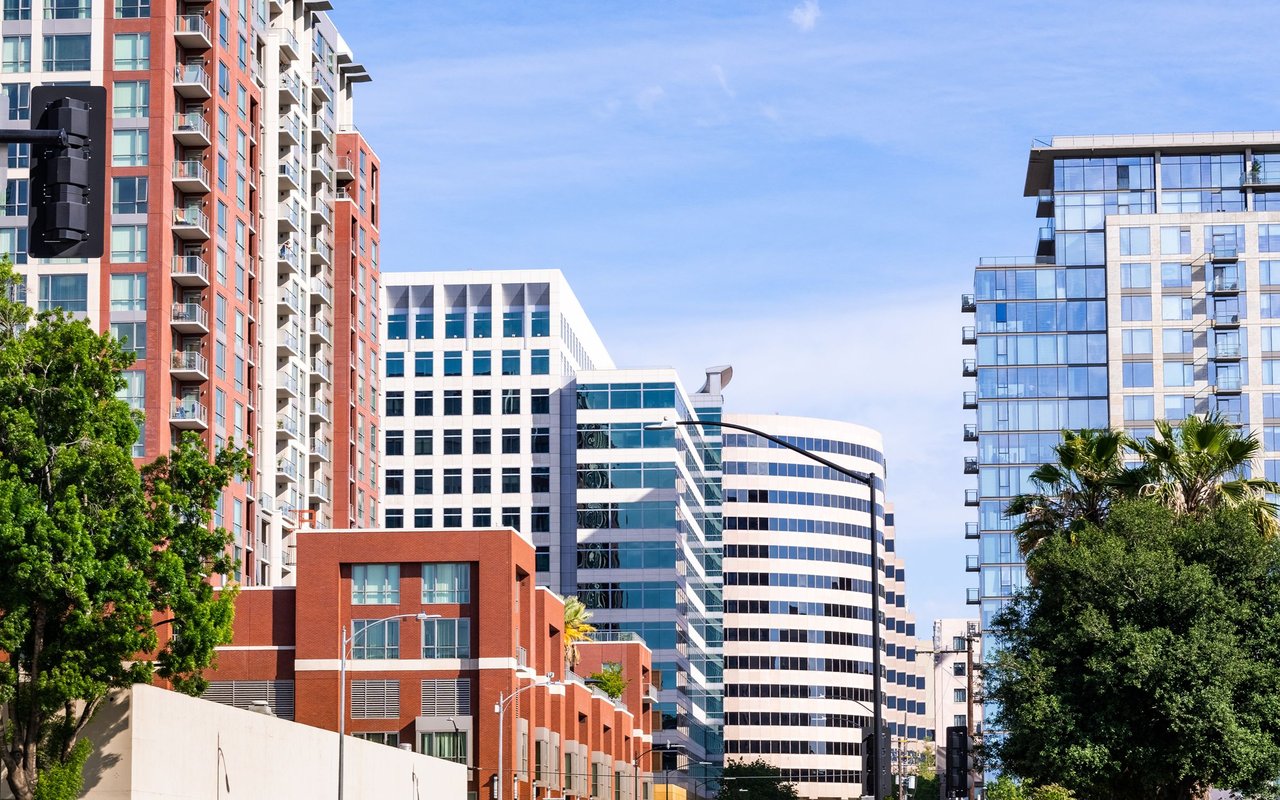
As the San Francisco Chronicle reported, new restaurants are drawing diners to Santa Cruz Avenue. Yeobo, Darling seats a dining room built on Korean and Taiwanese cooking from chefs who once ran a Michelin-starred restaurant in Palo Alto. A few blocks south, Eylan draws its own crowd.
Walk another block and the street tells a different story. A storefront with paper taped over the glass. A "for lease" sign faded enough that the phone number on it might not connect anymore. No one is lining up outside those doors, and in some cases no one has for years.
Both of these are downtown Menlo Park in September 2026. The restaurant story gets written up. The empty storefront story is the one that made the City Council rewrite its own zoning code this summer, and it is the one worth understanding if you are comparing Menlo Park to Palo Alto, Redwood City, or Los Altos and trying to figure out what "walkable downtown" actually means on Santa Cruz Avenue right now.
The restaurant wave nobody disputes
The new openings are real and they came fast. Clark's, the seafood concept from restaurateur Larry McGuire, took over a longtime diner space and has stayed busy on oysters and lobster rolls since opening. Cafe Vivant, a chicken-focused restaurant and wine shop, was slated for 720 Santa Cruz Ave. Canteen, a wine bar tied to the popular restaurant Camper, closed, with Causwells, the Marina neighborhood favorite, lined up to take over the space. Che Fico's Italian market closed, with its owners planning a casual Jewish restaurant in its place. Chefs Meichih and Michael Kim, who closed their Michelin-starred Maum in Palo Alto, brought Yeobo, Darling to 827 Santa Cruz Ave, into a space that had housed a Mediterranean restaurant for a decade. Restaurateur Ayesha Thapar, who told the San Francisco Chronicle she once wouldn't have dared open on Santa Cruz Avenue, brought her restaurant Eylan to town anyway. Just off the main strip, the Springline development pulled in still more of the new restaurant activity.
Part of the pitch, according to the San Francisco Chronicle, is math: Menlo Park's median household income sits at $206,000, per Census Bureau figures, and operators who once assumed San Francisco was the only market worth the drive are now calling this city an underserved one.
None of that is in dispute. The restaurants are full. The restaurant openings and the vacant storefronts are both part of downtown's current picture.
The downtown vacancy figures
Reimagine Menlo Park, a community group that has been tracking downtown storefronts, counted thirteen vacant retail locations on Santa Cruz Avenue as of June 2025, plus three more on Chestnut Street and one at Crane and Doyle. That works out to roughly 17 percent of downtown retail space sitting empty. Eight of those spaces were not even listed as available for rent. Six had gone dark that year alone. Six others had sat vacant for four years or longer.
That is not a snapshot from a slow year. The city's own actions in 2026 confirm the pattern held. When the Menlo Park City Council approved a package of zoning changes on June 23, 2026, it did so explicitly, in the words of the Almanac's reporting, as part of the city's effort to address "a growing vacancy problem." A downtown can have full restaurants and a real occupancy gap in the same six blocks. Menlo Park is proving it.
Why the empty spaces stayed empty
The mechanism is not mysterious once you look at the rents and the rules together. Reimagine Menlo Park put the average asking lease rate on Santa Cruz Avenue at $4.00 to $4.50 per square foot per month, a number that pencils for a national restaurant group opening a flagship but not for the kind of small, independent business that might otherwise take a modest storefront off the market.
Layer the zoning on top of that. The city's El Camino Real and Downtown Specific Plan, adopted in 2012, imposed strict limits on ground-floor uses along Santa Cruz Avenue specifically to cultivate a retail-focused streetscape. That meant a yoga studio, a salon expanding beyond a small footprint, or a gym could not simply lease a vacant space and open. Even as demand for wellness and personal-service businesses grew across the Peninsula, those uses remained subject to the downtown rules described above.
One landlord's application became a citywide rule change
The rewrite did not start as a city planning initiative. It started with Windy Hill Ventures, the owner of a recently renovated building at 870 Santa Cruz Ave, which filed an application in November 2024 arguing that the existing rules made it impossible to attract tenants for that specific property. Tod Spieker, a Menlo Park native who applied for the changes on the company's behalf, put it plainly to the Planning Commission: the building couldn't get rents or tenants to support the investment because the zoning ruled out too much of the market.
The application didn't stay narrow. Because it touched the Specific Plan itself, the proposed changes applied to the entire El Camino Real and Downtown zoning area, not just one address. Public records obtained by the Almanac show Windy Hill paid at least $57,658 in city staff costs between the November 2024 filing and the end of March 2025, during the citywide policy process. The Planning Commission unanimously recommended approval on May 18, 2026, and the full City Council signed off on June 23, 2026.
What actually changed, in plain terms
The approved rules, as reported by InMenlo, break down like this:
- Spas, salons, and other personal-service businesses can now open on the ground floor without a conditional use permit, where before they needed one.
- Small-scale recreation uses, including gyms and arcades, can now apply for a use permit, with the Planning Commission still holding approval authority over each one.
- Massage parlors remain barred from the downtown core regardless of the other changes.
- Banks, which already occupy roughly 28,000 square feet on Santa Cruz Avenue, are now capped at a total of 30,000 square feet, meaning the door for new banks is nearly shut even as other uses open up.
- Building owners can convert limited portions of the rear of ground-floor retail spaces to office use, subject to Planning Commission approval and a community benefit fee, a change aimed at businesses like the furniture store Luminaire that need a smaller public-facing footprint than their lease requires.
Read together, the changes expand the range of permitted ground-floor businesses and office uses while responding to the vacancy concerns described above.
What this means if you're comparing neighborhoods
If downtown character and daily walkability are part of why you're drawn to Menlo Park over Palo Alto or Redwood City, treat the current restaurant lineup as a photograph, not a floor plan. The ground-floor mix you see on a weekend tour is not fixed. The city just rewrote the rules specifically so that a salon, a gym, or a wellness studio could take a space that would have gone to retail or sat empty a year ago. That is not a bad thing for a neighborhood chasing occupancy, but it does mean the storefront next to the home you're touring could look different in twelve months than it does today.
The vacancy question is also tangled up with a separate, ongoing fight over downtown housing. A group calling itself Save Downtown Menlo has organized against a city plan to build housing on downtown parking lots, arguing in public comments that the restaurants, sidewalks, and lots are already full and that the real fix is the zoning flexibility the council approved in June. The city's counterargument, echoed by other residents, is that more people living within walking distance of Santa Cruz Avenue is what ultimately fills storefronts for good. Both sides agree on the underlying fact: downtown's near-term shape is not settled. If you're buying specifically for that main street feel, ask a current, on-the-ground question about occupancy and pending permits rather than relying on the restaurant list you read in a food section.
A few questions worth asking before you tour
Does a 17 percent vacancy rate mean downtown Menlo Park is struggling? Not on its own. Full restaurants and empty storefronts can coexist when the underlying issue is a rent and zoning mismatch rather than a lack of foot traffic. The 2026 rule changes address some ground-floor use restrictions, while reported asking rents and vacancies are also part of the picture.
What should I actually check before assuming the retail mix near a home stays the same? Ask what's currently leased, what's vacant, and whether any pending applications are in front of the Planning Commission. Under the new rules, a storefront that's empty today could become a salon or small gym within the year, which changes the street's feel in ways a listing photo won't show.
Menlo Park's downtown is genuinely in motion right now, not because of a single restaurant opening but because the city just changed what's legally allowed to happen behind those storefront windows. If you're weighing Menlo Park against another Peninsula neighborhood and want to understand what that means for a specific block or a specific home, Liz Lanza can walk you through what's actually leased, what's pending, and what the zoning shift is likely to bring next. Let's connect.
This article is general information, not legal, tax or financial advice. Consult a qualified professional about your situation.